
Caregiver Support in Singapore: A 2026 Guide to Care Coordination and Resources

Imagine spending your entire Saturday morning juggling three different specialist appointments while trying to figure out why your Home Caregiving Grant application was rejected. It's a reality many families face. The physical strain of lifting a loved one without the right equipment often combines with the mental fatigue of managing complex logistics. You want the best for your parents, but the system can feel like a maze. This is where professional care coordination services for elderly Singapore residents become a lifeline rather than a luxury.
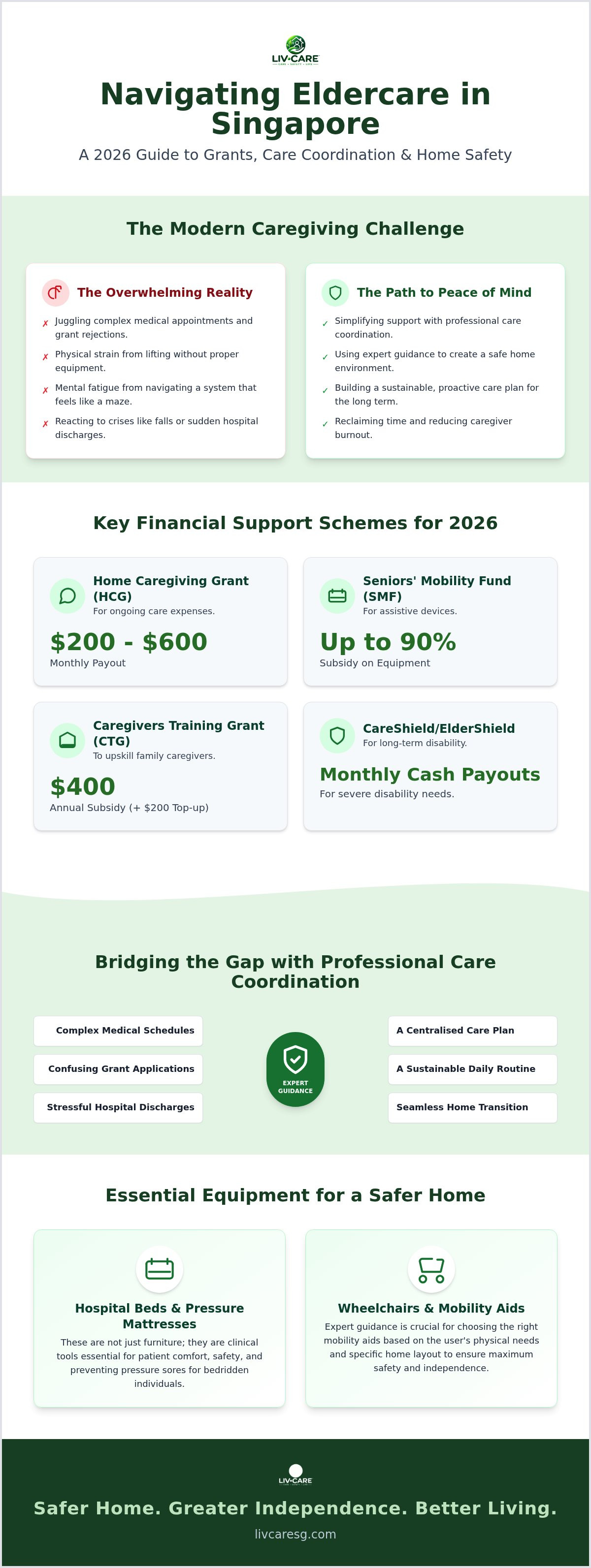
Our 2026 guide helps you reclaim your peace of mind by simplifying the latest government subsidies and equipment options. You'll discover how to access the enhanced HCG payouts, utilize SMF subsidies for mobility aids, and create a sustainable home care plan. We provide a clear roadmap to ensure your home is safe and your caregiving journey is manageable.
Table of Contents
Navigating Caregiver Support in Singapore: Grants and Subsidies
The Agency for Integrated Care (AIC) serves as the central node for coordinating community care. As the ageing population in Singapore grows, managing eldercare becomes more complex. Families often find that while grants provide relief, professional care coordination services for elderly Singapore residents are essential to integrate these funds into a routine. It's a system that bridges the gap between administrative applications and the actual day-to-day needs of a senior.
To better understand how home care works in practice, watch this helpful introductory video:
The Home Caregiving Grant (HCG) is a cornerstone of this support. In 2026, it offers monthly payouts from $200 to $600 for care supplies or help. Complementing this is the Seniors’ Mobility and Enabling Fund (SMF), which provides up to 90% subsidies for assistive devices like hospital beds. SMF eligibility now extends to households with a per capita income of up to $4,800. While these schemes lower financial barriers, money doesn't solve the logistical fatigue that care coordination services for elderly Singapore families address.
Key Financial Schemes for 2026
CareShield Life and ElderShield provide monthly cash payouts for severe disability, helping families cover long-term nursing costs. To ensure caregivers are equipped, the Caregivers Training Grant (CTG) offers a $400 annual subsidy with a $200 top-up in 2026. This grant allows family members to upskill through courses on safe lifting and dementia care. These resources empower families to provide better support while protecting their own health.
The Essential Role of Care Coordination Services for Elderly Singapore Families
Effective eldercare requires moving from a reactive approach to proactive management. Many families only seek help during a crisis, such as a sudden fall or a hospital discharge. However, care coordination services for elderly Singapore residents focus on the logistics of ageing before emergencies happen. This involves centralising medical appointments, managing equipment upkeep, and ensuring the home environment remains safe for daily activities. It's about building a sustainable routine that supports both the senior and the caregiver.
A centralised care plan acts as a single source of truth for the family. It prevents the logistical fatigue that often leads to caregiver burnout. When everyone knows the schedule for medication, physiotherapy, and equipment maintenance, the mental load decreases significantly. While you can find details on Caregiver grants and subsidies through government portals, those sites often lack the practical "how-to" for daily coordination. Professional support bridges the gap between the clinical hospital setting and the long-term reality of home care.
Benefits of Professional Care Coordination
Expert guidance is invaluable when selecting essential equipment for the home. Professional coordinators help you choose the right wheelchairs and mobility aids based on the user's specific physical needs and home layout. This technical precision reduces family conflict, as decisions are based on expert advice rather than guesswork. For families starting this transition, our Singapore Elderly Home Safety Guide offers practical tips on home modifications. Taking the first step with a Home Care Assessment can help identify hidden risks in your current living environment.
Sustainable Home Care with Liv.Care Membership and Equipment
Managing a chronic condition at home requires more than just a one-time purchase. While official government care support initiatives provide a foundation, the actual execution of daily care often falls on the family. Liv.Care bridges this gap by offering care coordination services for elderly Singapore families through a unique membership model. This approach moves beyond the transactional nature of buying equipment, focusing instead on long-term sustainability and reliability for the caregiver.
For bedridden patients, selecting the right hospital beds and pressure mattresses is critical. These items aren't just furniture; they're clinical tools that prevent pressure sores and ease the caregiver's physical burden. Testing these products is essential. We maintain a physical showroom where you can test mobility scooters and walking aids firsthand. This hands-on experience ensures that the equipment fits the user's mobility level and the home's dimensions before you make a commitment.
Comprehensive Support Beyond the Purchase
A safe home starts with a professional Home Care Assessment. By integrating these assessments with your equipment selection, you create a fall-proof environment tailored to your loved one's specific needs. This proactive strategy is a core part of effective care coordination services for elderly Singapore residents. It ensures that every grab bar or wheelchair is placed with precision to maximise safety and longevity.
Priority Access and Ongoing Care
The Care Membership Singapore program offers families priority access to specialised resources and recurring support. Managing long-term health isn't a sprint; it's a marathon. Having a dedicated partner for equipment maintenance and care guidance provides much-needed peace of mind. This recurring model ensures that your care plan evolves as your loved one's needs change over time.
Building a Sustainable Future for Home Care
Securing a safe and comfortable home environment for your loved one is a journey that requires both financial awareness and practical support. While government grants provide a necessary foundation, the daily logistics of eldercare often demand a more structured approach. Professional care coordination services for elderly Singapore families bridge this gap by integrating clinical needs with home life. By combining expert care coordination with a curated selection of mobility and home care products, you can reduce the physical and mental strain of caregiving. Our dedicated Singapore-based support team is committed to helping you maintain a high standard of care without the burnout. It's about ensuring longevity and safety for your senior while preserving your own well-being. Discover how Liv.Care Membership can support your caregiving journey today. You're not alone in this process; reliable help is always available.
Frequently Asked Questions
What are the most common caregiver support grants in Singapore for 2026?
Common grants in 2026 include the Home Caregiving Grant (HCG), which provides monthly payouts up to $600 for eligible households. The Seniors' Mobility and Enabling Fund (SMF) offers subsidies of up to 90% for assistive devices. Families can also access the Caregivers Training Grant (CTG) for upskilling and the Migrant Domestic Worker Levy Concession to reduce costs for domestic helpers.
How do I apply for the Seniors’ Mobility and Enabling Fund (SMF) for a wheelchair?
To apply for the Seniors' Mobility and Enabling Fund (SMF) for a wheelchair, you must first get a functional assessment from a qualified therapist. After the assessment, submit your application through the Agency for Integrated Care (AIC) online portal. In 2026, eligibility covers Singaporeans and Permanent Residents with a monthly household per capita income of up to $4,800.
What is the difference between home nursing and care coordination services?
Home nursing involves clinical medical tasks such as wound dressing or medication administration performed by a nurse. Care coordination services for elderly Singapore families focus on the logistical management of care. This includes home safety assessments, equipment maintenance, and appointment scheduling. While nursing treats medical conditions, coordination ensures the entire home care environment remains safe, organised, and sustainable for the caregiver.
Can the Home Caregiving Grant (HCG) be used to purchase mobility aids from Liv.Care?
The Home Caregiving Grant (HCG) is a monthly cash payout, so you can use it to purchase mobility aids and safety equipment from Liv.Care Singapore. These funds help offset the costs of wheelchairs, hospital beds, or walking aids. Many families also use the grant to fund care coordination services for elderly Singapore residents, helping them manage the complex daily requirements of long-term care.
Comments