
Choosing a Wheelchair in Singapore: The Complete 2026 Caregiver’s Guide

Investing in the wrong wheelchair Singapore model isn't just a blow to your budget; it can mean the difference between your parent enjoying a day at Gardens by the Bay or being confined to a single room. It's completely natural to feel overwhelmed by technical specifications and the latest June 2026 regulations. You want a solution that ensures safety and comfort without the fear of buying equipment that doesn't fit your HDB doorway or MRT cabin.
Our guide provides the clarity you need to make an informed decision for your loved one's independence. We'll explore the critical differences between manual and electric options, explain the new Certificate of Medical Need requirements, and show you how to maximize government subsidies like the SMF and ATF. By the end, you'll have a clear roadmap for selecting and maintaining a mobility aid that truly enhances your family's quality of life.
Table of Contents
Understanding Mobility Aids: Types of Wheelchairs in Singapore
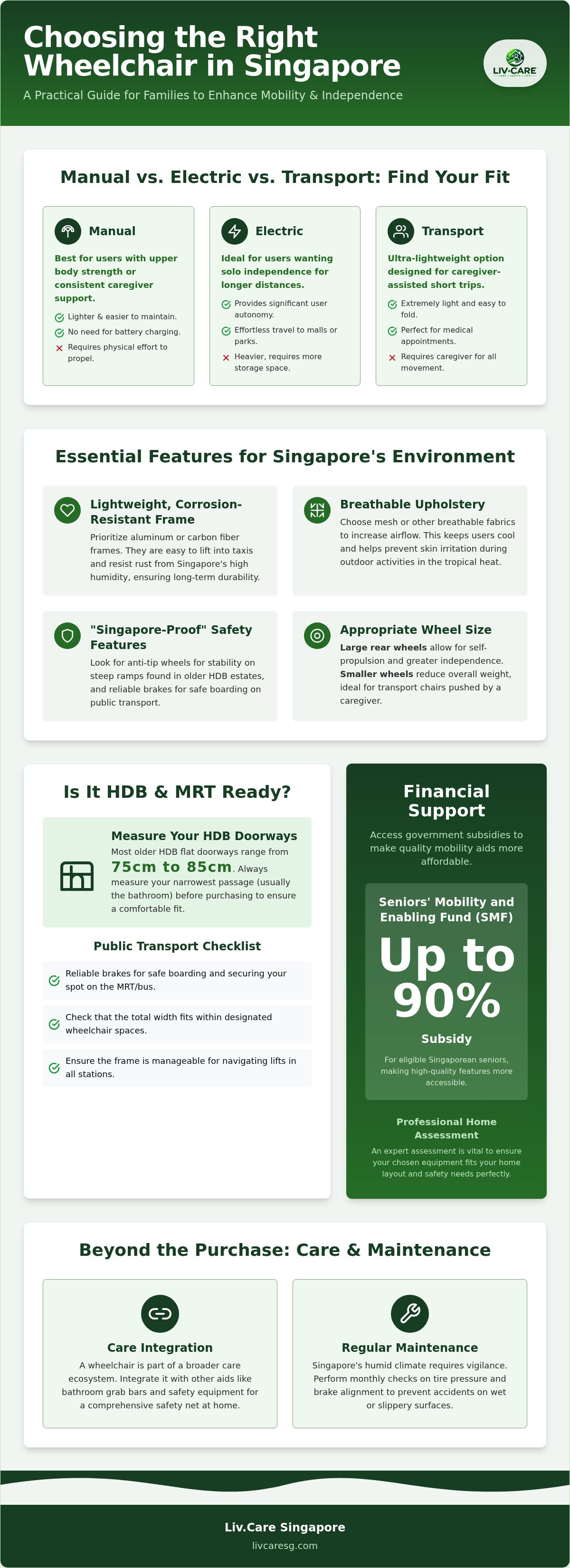
Selecting a wheelchair Singapore families can depend on requires more than just picking a seat. It involves understanding how different Types of Wheelchairs function within our specific environment. Because of our high humidity, we prioritize materials like aluminum that resist corrosion and upholstery that allows for airflow to prevent skin irritation. It's also essential to assess the user's cognitive ability and arm strength before deciding on a model, as a mismatch can lead to safety risks or equipment that goes unused.
To see how these mobility aids perform on our local streets, watch this demonstration of accessibility in the city:
Manual vs. Electric: Choosing the Right Level of Independence
Manual chairs suit those with good upper body strength or consistent caregiver support. They're lighter and often easier to maintain over many years. Electric wheelchairs provide significant independence for users who want to travel solo to the market or mall, though they require more storage space and regular battery charging. We often suggest electric models for seniors who wish to remain active in their neighborhoods without relying on others for every movement. You can browse various options in our Products section to see which fits your needs.
Foldable vs. Rigid Frames
Most Singaporean homes and vehicles favor foldable frames. These collapse quickly, fitting into taxi boots or narrow HDB corridors without trouble. Rigid frames are sturdier and offer better performance, but they're less convenient for frequent car travel. A transport chair is a specialized, ultra-lightweight option designed specifically for short-distance medical appointments where a caregiver provides all the propulsion.
Key Features for Navigating the Singapore Environment
Singapore's tropical humidity and urban density demand specific equipment features. When choosing a wheelchair Singapore caregivers should prioritize lightweight materials like aluminum or carbon fiber. These metals are easy to lift into taxi boots and resist the rust common in our damp climate. We recommend breathable mesh upholstery to keep users cool during outdoor trips. Safety is equally vital, so look for "Singapore-proof" features like anti-tip wheels that provide stability when navigating the steep ramps often found in older estates.
Wheel size significantly impacts daily use. Large rear wheels allow users to self-propel, offering more independence. Smaller wheels are better for transport-focused models where a caregiver does the pushing, as they reduce the overall weight. For families managing costs, the Seniors' Mobility and Enabling Fund (SMF) can provide up to 90% subsidy for eligible seniors, making high-quality features more accessible.
HDB and Public Transport Accessibility Standards
Doorway width is a critical factor for home mobility. Most older HDB flat doorways range between 750mm and 850mm. Before purchasing, verify that your chosen model fits comfortably through your specific bedroom and bathroom entrances. Public transport is highly accessible, but success requires a few checks:
Ensure the chair has reliable brakes for safe MRT boarding.
Verify the width fits within dedicated wheelchair spaces on buses.
Check that the frame is manageable for lift access in older interchanges.
It's helpful to visit a medical equipment showroom to test maneuverability in tight mock-up spaces before making a final choice.
Beyond the Purchase: Support and Care Integration
Selecting a wheelchair Singapore families can trust is only the first step in a larger care journey. We believe that professional home care assessments are essential to ensure your new equipment integrates perfectly with your home's unique layout. An expert can identify potential obstacles, such as floor transitions or tight corners, that might hinder daily use. Beyond the initial setup, regular maintenance is vital for safety. Singapore's humid climate and frequent rain can affect brake responsiveness and tire traction. We suggest monthly checks on tire pressure and brake alignment to prevent accidents on slippery surfaces.
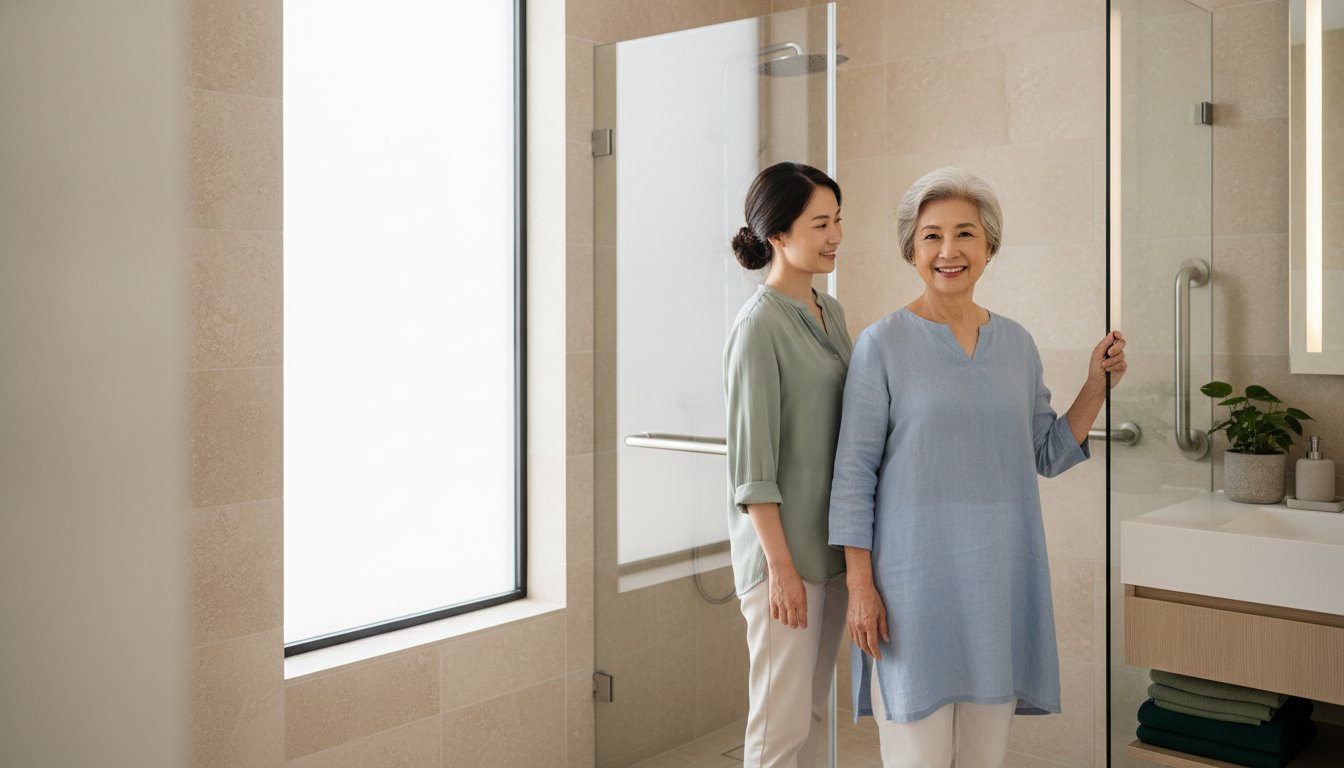
This mobility solution should not exist in isolation. It is part of a broader care ecosystem designed to protect your loved one. Integrating your wheelchair Singapore model with other aids, such as bathroom safety equipment or hospital beds, creates a comprehensive environment that minimizes fall risks and maximizes comfort. A holistic approach ensures that every room in the house supports the user's independence and safety.
The Liv.Care Advantage: Membership and Long-Term Support
Our Care Membership program provides a sustainable solution for families seeking ongoing support and equipment discounts. We recognize that managing transitions in mobility can be stressful for caregivers. Our dedicated care coordination helps you navigate these changes with confidence, ensuring you have the right tools at every stage. For additional guidance on fall prevention and recovery strategies, we encourage you to explore our caregiving resources and blogs. By choosing a partner that offers long-term reliability rather than just a transaction, you ensure your loved one remains safe and supported for years to come.
Ensuring Long-Term Mobility and Safety for Your Loved Ones
Finding the ideal wheelchair Singapore families need involves balancing clinical requirements with the practicalities of our local environment. We've explored how identifying the correct frame material, wheel size, and specialized features like breathable upholstery can significantly improve daily comfort. Remember that a mobility aid is most effective when it fits seamlessly into your home layout and matches the user's specific physical abilities.
To ensure you make the right choice, we invite you to visit our showroom for hands-on testing. Our team provides professional home care assessments to guarantee a perfect fit, while our exclusive Care Membership benefits offer peace of mind through ongoing maintenance and support. Browse our curated selection of high-quality wheelchairs and mobility aids to find a solution that prioritizes safety and longevity. You don't have to navigate this journey alone; we're here to support your family every step of the way.
Frequently Asked Questions
How much does a quality wheelchair cost in Singapore?
The cost of a quality wheelchair Singapore families choose depends on the material, weight, and motorized features. Manual chairs are generally the most accessible option; however, electric models with specialized batteries involve a higher investment. We recommend checking eligibility for the SMF or ATF subsidies. These government schemes can significantly reduce the out-of-pocket expense for Singapore Citizens and Permanent Residents.
Can I bring my lightweight foldable wheelchair on a Singapore bus or MRT?
You can certainly bring your wheelchair on public transport. LTA regulations effective from June 2026 state that your device must fit within the dimensions of 70cm width and 120cm length. Most foldable models easily meet these standards. Every MRT station and public bus provides ramp access and designated priority areas to ensure a safe journey for all wheelchair users.
Do I need a doctor’s prescription to buy a wheelchair in Singapore?
A prescription isn't required for manual models, but you'll need a Certificate of Medical Need for motorized mobility scooters under the 2026 regulations. Seniors aged 70 and above are exempt from this requirement. Even without a legal mandate, we suggest a professional home care assessment. This helps verify that the equipment is safe and appropriate for your loved one's specific mobility level.
What is the difference between a mobility scooter and an electric wheelchair?
Electric wheelchairs are controlled by a joystick and offer excellent maneuverability in confined spaces like HDB kitchens. Mobility scooters use a handlebar steering system and are better suited for longer outdoor commutes. While both provide motorized assistance, electric wheelchairs are often the preferred choice for those who need to navigate both home and public spaces with precision and ease.


Comments